
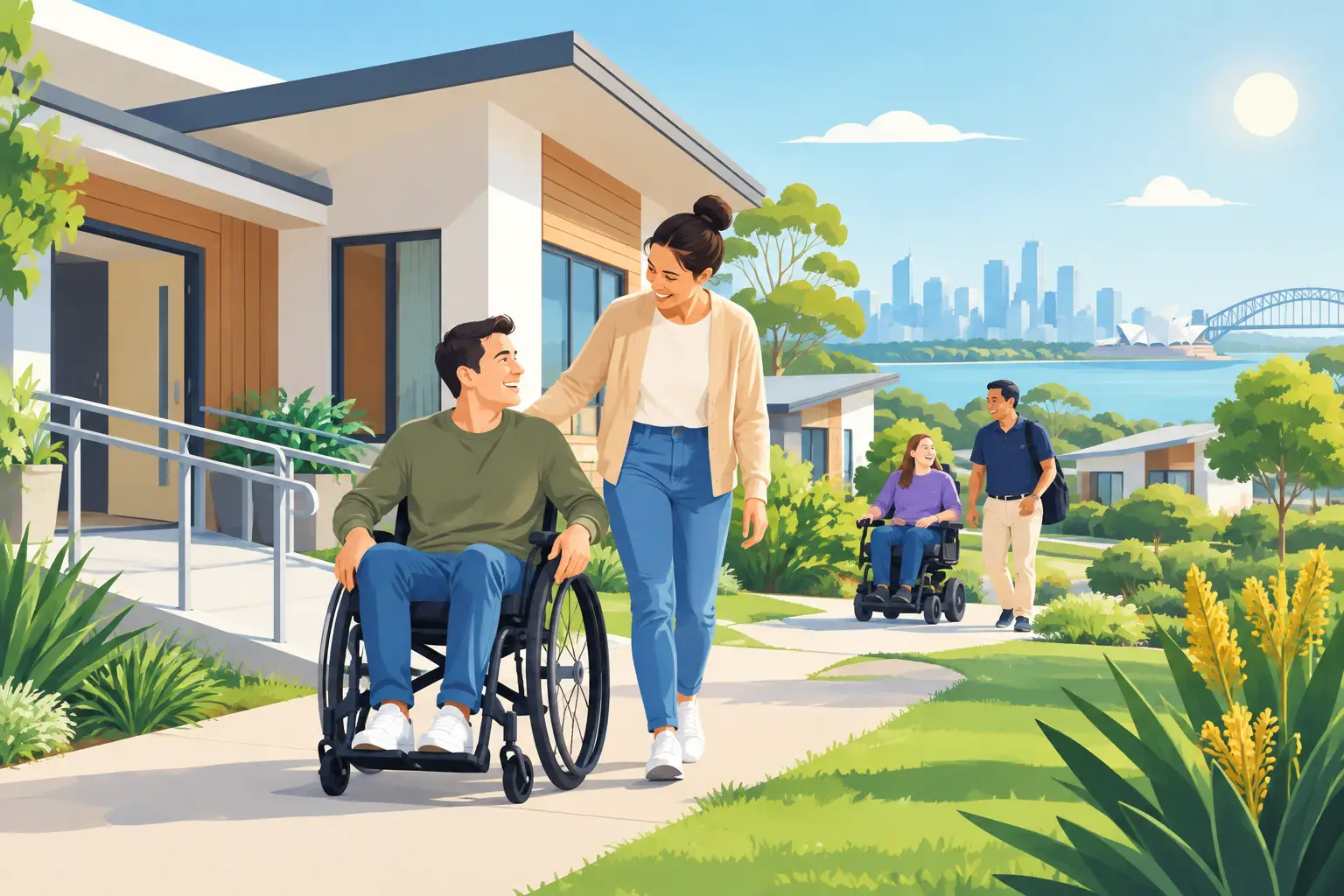
A home can make everyday life easier, safer and more independent - or make every routine harder than it needs to be. That is why the future of disability housing Australia is about far more than constructing new buildings. It is about whether people can choose where they live, who they live with, how support fits into their life, and whether their home remains right for them as their needs and goals change.
For many NDIS participants and families, housing decisions happen under pressure. A change in health, ageing parents, a tenancy ending or a hospital discharge can leave little time to compare options. The best future for disability housing is one where people have clearer information, more suitable choices and enough time to make decisions that feel like their own.
The future of disability housing Australia is about choice
Australia’s disability housing landscape is moving away from the assumption that one model suits everyone. Group homes and shared living arrangements will remain the right choice for some people, particularly where companionship or regular support is wanted. But they should be an option, not the default.
People may want to live alone, with a partner, with friends, close to family, or in an ordinary rental within their local community. They may also want to stay in the home they already know, with modifications or different support arrangements. Meaningful choice includes all of these possibilities.
This shift requires more than good intentions. It depends on homes being available in the places people want to live, tenancy arrangements being understandable, and support providers being able to work flexibly. A beautifully designed apartment is not a good outcome if it is far from a person’s work, family, culture, transport or community.
SDA will grow, but it is not the answer for everyone
Specialist Disability Accommodation, usually called SDA, is NDIS funding for housing designed for people with very high support needs or extreme functional impairment. It can fund the cost of specialised housing, such as fully accessible dwellings, homes with reinforced features, or buildings designed to support assistive technology.
SDA has helped create more purpose-built options, and its continued development matters. Well-designed SDA can give a person greater privacy, safety and control over their daily routine. It can also reduce barriers that standard housing often creates, such as narrow doorways, inaccessible bathrooms or a lack of space for equipment and support workers.
However, SDA eligibility is limited. Many people with disability will not qualify, even when they face real barriers finding an accessible and affordable place to live. The future of disability housing cannot rest only on SDA supply. It also needs a broader housing market where accessibility is expected rather than treated as a specialist extra.
That means more adaptable homes in new developments, better access to home modifications, and rental properties that do not exclude tenants because they use mobility aids, need an assistance animal or require reasonable changes to the property. It also means better conversations between disability services, housing providers, developers and governments.
Better design should support ordinary life
Accessible housing is often discussed in technical terms, but good design is practical. It can mean a step-free entry, a bathroom that allows a wheelchair to turn, adjustable kitchen features, reliable temperature control, clear lighting, quiet spaces or technology that helps someone communicate and manage their environment.
The right features depend on the person. A home designed for someone with physical disability may not meet the sensory needs of an autistic person. A shared home that works well for one resident may feel overwhelming or restrictive for another. This is why consultation with people with disability must sit at the centre of planning, rather than being added after plans are drawn.
Technology will play a larger role too. Smart locks, automated doors, voice controls, sensors and communication systems can support greater independence. Yet technology should never replace human judgement, privacy or reliable support. It needs to be easy to use, backed up when systems fail, and chosen with the resident rather than imposed on them.
Support and housing need clearer boundaries
One of the most confusing parts of disability housing is the difference between the home itself and the support delivered in it. SDA relates to the housing component for eligible participants. Supported Independent Living, or SIL, funds paid personal support in a shared living arrangement for some participants. Other people may use individual supports in their own home, sometimes alongside help from informal supports, mainstream services or a tenancy provider.
These arrangements can overlap in practice, but they are not the same thing. A person should be able to understand who is their landlord, who provides their daily supports, what their tenancy rights are and what will happen if they want to change providers.
The future should bring greater separation between housing and support where possible. When a person can keep their home while changing a support provider, they have more control and less risk of disruption. This will not look identical in every setting, particularly in shared homes with complex support needs, but the principle remains valuable: a home should not be conditional on accepting support that no longer feels right.
Location and community matter as much as the building
A new accessible property can still leave someone isolated. Housing choices need to consider the distance to public transport, local shops, medical appointments, education, work, friends and activities that matter to the person. In regional, rural and remote communities, the challenge can be especially acute because there may be fewer suitable properties and a smaller workforce.
There is no simple fix. Building more homes in capital cities does not solve access in regional areas, while small local projects can be difficult to sustain without enough support workers and services. Planning needs to reflect local demand, including the needs of Aboriginal and Torres Strait Islander people, culturally diverse communities, and people who want to remain connected to Country, language, family and community.
Housing providers and support organisations can help by being transparent about service areas, property features, vacancies and the kinds of support they can realistically provide. For families and support coordinators, searchable information makes it easier to compare options before a situation becomes urgent.
What to look for when comparing housing options
A future-focused housing decision still begins with the person’s present life. Rather than starting with the first available vacancy, it can help to ask whether the home supports the person’s routines, relationships and goals.
Consider the accessibility of the property, the type and timing of support available, the location, the tenancy agreement, household compatibility and total out-of-pocket costs. Ask how residents are involved in decisions, how complaints are handled, and what choices exist if the arrangement no longer works. If the property is SDA, ask which SDA design category it is enrolled under and whether it matches the participant’s plan and needs.
It is also reasonable to ask practical questions: Can visitors come and stay? Can the person choose their own daily schedule? What happens if a support worker does not arrive? Who is responsible for repairs? Is there a clear process to change support providers? Straight answers to these questions are a sign of a provider that respects residents as tenants and individuals.
Directories such as Disability Providers can help people identify housing, SDA and support services by location and service type, then make more informed enquiries. A directory cannot decide what is right for someone, but it can reduce the time spent searching and make the available options easier to compare.
A stronger future starts before a housing crisis
The most positive change may be earlier planning. Conversations about housing should begin well before a family carer reaches burnout, a young person leaves school, or a current arrangement becomes unsafe. Participants can raise housing goals in NDIS planning discussions, gather evidence about their support needs, and seek advice from support coordinators or other trusted professionals where appropriate.
Plans should also leave room for change. A person’s preferred living arrangement at 18 may not be their preference at 28. Independence can increase with the right home and support, while needs can also become more complex over time. Good housing pathways allow people to move forward without losing stability, relationships or control.
The future of disability housing in Australia will be judged less by the number of new dwellings than by the lives people can build within them. The right home should offer more than care nearby. It should give a person a place to belong, a real say in everyday decisions, and the confidence to plan a life on their own terms.
Share on